Gold365 Book vs Tiger Exchange Book: Complete Comparison Guide 2026
Introduction
Choosing the right online brokerage can feel like navigating a maze of technical jargon, fee structures, and platform nuances. Two names that repeatedly surface in the conversation are Gold365 Book and Tiger Exchange Book. Both claim to offer cutting‑edge technology, competitive pricing, and a seamless trading experience for retail and professional investors alike. This guide provides a systematic, side‑by‑side analysis of the two platforms as of 2026, covering everything from account onboarding to security protocols. By the end, you’ll have a clear picture of which broker aligns with your trading style, risk tolerance, and long‑term objectives.
Platform Overview
Gold365 Book
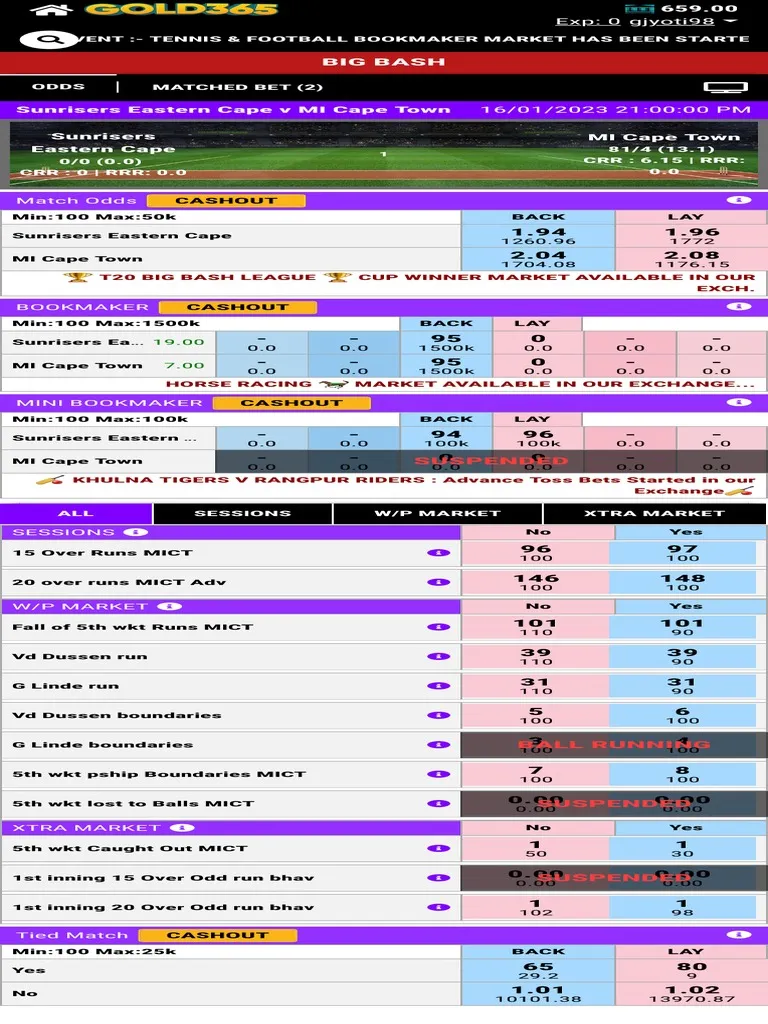
Gold365 Book emerged in 2020 as a specialist in precious‑metal derivatives, expanding rapidly into equities, forex, and cryptocurrencies. Its core proposition revolves around a “single‑book” architecture that consolidates order flow across multiple liquidity providers, promising tighter spreads and faster execution. The platform offers a web‑based interface, a desktop client for Windows/macOS, and lightweight mobile apps for iOS and Android.
Tiger Exchange Book
Tiger Exchange Book, launched in 2018, started as a discount broker for Asian equities before broadening its catalogue to include global stocks, ETFs, options, and futures. The hallmark of Tiger’s platform is its modular design—traders can add or remove toolkits such as advanced charting, algorithmic API access, or news aggregators according to their preferences. Like Gold365, Tiger provides web, desktop, and mobile solutions.
Account Creation & Onboarding
Both brokers have streamlined the registration process to accommodate a global clientele. Prospective users must submit personal identification, proof of residence, and, where required, source‑of‑funds documentation to satisfy AML and KYC regulations.
Gold365 Book’s onboarding portal is designed for rapid completion. After uploading the required documents, the verification team typically responds within 30 minutes. For traders eager to start, the platform offers a one‑click “quick‑start” button that creates a demo account instantly, followed by an invitation to upgrade to a live account.
To experience Gold365’s environment firsthand, you can gold365 login once your credentials are approved. If you are new to the service, the gold365 signup page guides you through the entire process, including optional risk‑profiling questionnaires.
Tiger Exchange Book follows a similar verification timeline but adds a “financial fitness” quiz that influences margin limits and product eligibility. The quiz results are presented transparently, helping users understand why certain high‑risk instruments may be restricted.
Trading Instruments & Market Coverage
Gold365 Book excels in the precious‑metal space, offering over 150 contracts for gold, silver, platinum, and palladium across spot, futures, and options markets. Additionally, the broker provides access to 5,000+ global equities, 1,200 forex pairs, and a curated list of 200 cryptocurrency tokens. The platform’s “One‑Click Convert” feature lets traders switch between spot and derivative versions of the same metal without leaving the order window.
Tiger Exchange Book focuses on breadth rather than depth. The exchange lists more than 12,000 stocks across North America, Europe, and Asia, alongside 800 ETFs and 350 options chains. Futures coverage includes major indices, commodities, and interest‑rate contracts, but the metal offering is limited to a handful of gold and silver ETFs. For multi‑asset traders, Tiger’s extensive equity universe may be more appealing.
Fees and Commission Structure
Fee transparency is a decisive factor for cost‑conscious traders. Below is a concise breakdown (all figures are net of taxes and expressed in USD).
- Gold365 Book – Zero commission on spot gold and silver trades, 0.02 % spread on other metals, $0.005 per share for equities, and a flat 0.03 % fee on forex pairs. Cryptocurrency trades incur a 0.15 % taker fee and a 0.08 % maker fee.
- Tiger Exchange Book – $0.004 per share for U.S. equities, $0.005 for international stocks, a $2.50 flat fee per options contract, 0.04 % spread on forex, and a 0.2 % commission on crypto spot trades.
Both platforms waive inactivity fees, but they impose a nominal $10 monthly data‑feed charge for real‑time market depth, which can be disabled if not required.
Liquidity, Execution Speed, and Slippage
Gold365 leverages its single‑book engine to aggregate liquidity from more than 30 Tier‑1 banks and ECNs, yielding an average execution latency of 12 ms for major FX pairs and 19 ms for equity orders. The broker also offers “Smart Order Routing” (SOR) that dynamically selects the best venue, reducing slippage during high‑volatility events.
Tiger Exchange utilizes a multi‑venue architecture connected to major exchanges via direct market access (DMA). For U.S. equities, average latency sits at 9 ms, while Asian market orders average 15 ms. However, Tiger’s reliance on exchange‑specific order books can result in higher slippage for thinly traded instruments compared with Gold365’s pooled liquidity pool.
Platform Usability & Customization
The user interface of Gold365 Book is clean and minimalist, emphasizing speed of order entry. Traders can toggle between “Basic” and “Advanced” modes. The advanced mode includes a detachable chart window, built‑in economic calendar, and a programmable hot‑key system that supports up to 50 custom shortcuts.
Tiger Exchange Book offers a modular dashboard where widgets can be added or removed. The platform supports drag‑and‑drop chart panels, multi‑monitor layouts, and a built‑in script editor for Pine‑like languages. While this flexibility can be a boon for power users, beginners may find the sheer number of options overwhelming.
Mobile Experience
Both brokers have invested heavily in mobile development. Gold365’s mobile app mirrors the desktop’s “One‑Click Convert” functionality and provides biometric login, push‑notification alerts, and a simplified watchlist manager. Trade execution is reported to be within 20 ms of desktop latency.
Tiger’s mobile app emphasizes news integration, with a customizable ticker and real‑time sentiment analysis. The app also supports “partial fill” order types that are unavailable on Gold365’s mobile platform. However, Tiger’s UI feels denser, which can affect navigation speed on smaller screens.
Security Measures & Regulatory Oversight
Security is non‑negotiable in today’s cyber‑threat landscape. Gold365 Book employs AES‑256 encryption for data at rest, TLS 1.3 for data in transit, and multi‑factor authentication (MFA) for all account actions. The broker is regulated by the Financial Conduct Authority (FCA) in the UK and the Commodity Futures Trading Commission (CFTC) in the United States, offering investors protection under both jurisdictions.
Tiger Exchange Book also uses AES‑256 and TLS 1.3, with mandatory MFA for withdrawals. Regulation is provided by the Securities and Exchange Commission (SEC) and the Australian Securities and Investments Commission (ASIC). Tiger additionally participates in a “segregated account” scheme, ensuring client funds are held in a separate bank from operational capital.
Customer Support & Educational Resources
Gold365 offers 24/7 live chat, email support, and a telephone hotline available in six languages. The knowledge base includes video tutorials, algorithmic trading guides, and a “trader‑to‑trader” forum moderated by Gold365 staff.
Tiger provides email support, a ticketing system, and live chat limited to business hours (GMT +0 to GMT +8). Educational content focuses on market fundamentals, with weekly webinars featuring guest analysts. While thorough, Tiger’s support model does not match Gold365’s round‑the‑clock availability.
Pros and Cons Summary
| Gold365 Book | Tiger Exchange Book | |
|---|---|---|
| Strengths | • Superior metal offering • Faster FX execution • 24/7 support • Simple UI for quick trades |
• Vast equity universe • Lower latency on U.S. stocks • Modular dashboard • Strong regulatory coverage |
| Weaknesses | • Limited cryptocurrency selection • Fewer advanced charting add‑ons • Higher fees on some equities |
• Higher slippage on thin instruments • Complex UI for beginners • No dedicated metal derivatives pool |
Which Platform Is Right for You?
If your trading strategy revolves around precious metals, high‑frequency FX, or you value a straightforward interface with immediate support, Gold365 Book stands out as the stronger candidate. Its single‑book liquidity model, rapid execution, and around‑the‑clock assistance are tailored for active traders who prioritize speed and reliability.
Conversely, if you need access to a broad spectrum of global equities, enjoy customizing your workspace, or require advanced algorithmic tools, Tiger Exchange Book offers a more versatile environment. The platform’s extensive market coverage and modular design make it suitable for investors who require depth across asset classes.
Conclusion
The 2026 landscape of online brokerage is competitive, and both Gold365 Book and Tiger Exchange Book have carved distinct niches. Gold365’s specialization in metals and streamlined trading experience appeals to fast‑moving, commodity‑focused participants. Tiger’s expansive equity catalog and customizable interface cater to diversified portfolio managers and data‑driven traders. By evaluating your primary asset focus, fee tolerance, and desired level of platform sophistication, you can make an informed decision that aligns with your trading objectives. Whichever platform you choose, ensure you conduct a final personal due‑diligence review—test the demo environment, assess the fee schedule under real‑world conditions, and verify that the broker’s security protocols meet your comfort level.